
Kitchen Flooring and Lighting in Tacoma
Need kitchen flooring and lighting in Tacoma? We help you choose a floor that handles spills, muddy shoes, pets, and daily traffic, then we build a lighting plan that makes cooking safer and the room feel comfortable at night. Most projects start with a measure and lighting walkthrough, so you know what fits before you order materials.
Call Us Now
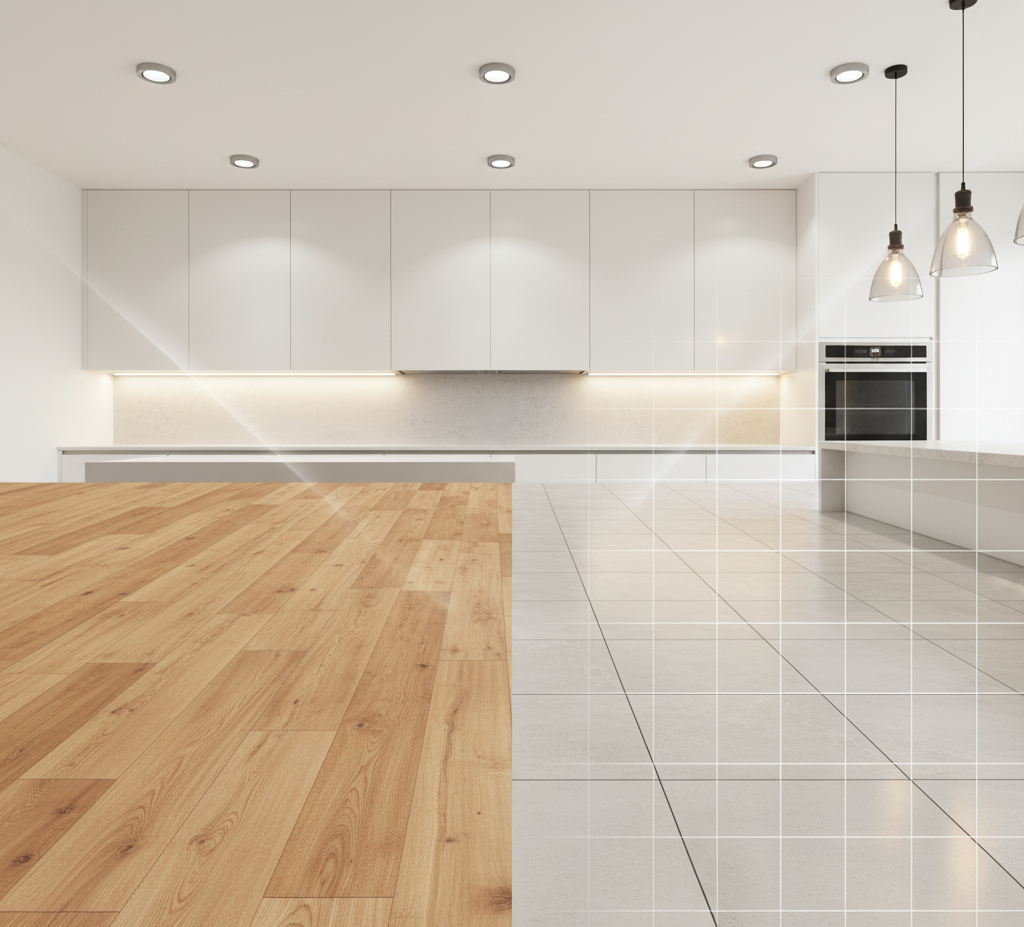
At Artisan Kitchen Works, we pair durable floor options with layered lighting: recessed cans for general light, pendants where you gather, and under-cabinet LEDs for clean task lighting. If this is part of a bigger remodel, we coordinate with Kitchen Design & 3D Rendering and Kitchen Permits & Project Management so the plan stays consistent from demo to final trim. See our full approach on the Kitchen Remodeling.
Best all-around combo: LVP + under-cabinet LEDs (3000K–3500K) on a dimmer.
- Pets and kids: LVP or porcelain tile for scratch and spill resistance.
- Busy cooks: Prioritize under-cabinet task lighting, then add a dimmable ceiling layer.
- Common mistake: Mixing color temperatures. We match bulbs, drivers, and dimmers so the kitchen looks consistent.
Want help choosing? Request a measure & lighting walkthrough and we’ll bring options that fit your space and budget.
Flooring Guide: Choose What Fits Your Life
Luxury Vinyl Plank (LVP)
Tough, water-tolerant, and comfortable underfoot. LVP handles pets and traffic without fuss (plan it as part of a full kitchen renovation). and offers realistic wood or stone looks.
Pros:
- Highly durable, water resistant
- Budget-friendly, quieter underfoot
Best for:
- Busy families, low-maintenance homes
- Rental-friendly durability
Tile (Porcelain/Ceramic)
Gold standard for water and heat resistance. Great around ranges and sinks and ideal with radiant heat (coordinate grout, splash height, and edge details).
Pros:
- Extremely durable, waterproof
- Easy to sanitize, radiant-heat compatible
Best for:
- High-mess cooks
- Long-term durability, easy cleanup
Engineered Hardwood
Real wood veneer over a stable core brings warmth and a timeless look with better dimensional stability than solid wood.
Pros:
- Natural beauty, warmer feel
- Refinishing potential (varies by wear layer)
Best for:
- Open-concept spaces
- Seeking a unified look across kitchen and living areas
Cork (Selective Use)
Soft underfoot, quiet, and gently warm. Modern cork products can be sealed for kitchens.
Pros:
- Comfort, sound absorption
- Renewable material
Best for:
- Comfort-first kitchens
- Thoughtful moisture habits
Key Performance Factors We Evaluate
- Slip resistance: Tile finish and grout width affect traction; LVP textures help too.
- Water tolerance: Consider sink and dishwasher zones; plan mats and silicone caulk lines (verify DW air gaps/high-loops & sink reveals).
- Substrate prep: Leveling, underlayments, and vapor barriers protect longevity.
- Transitions: Clean thresholds to adjacent rooms keep the look seamless.
Lighting Layers: See Better, Work Faster, Feel Right
A bright ceiling alone isn’t enough. Great kitchens use three distinct layers of light:
Task Lighting
Focused light where you work—under-cabinet LEDs over prep zones, sink lighting, and range illumination.
- Clear sight lines for chopping, reading labels, and cleanup.
- Reduces shadows cast by your shoulders and upper cabinets.
Ambient Lighting
Overall room light—recessed LEDs sized and spaced to avoid hotspots or dark corners.
- Even brightness for mornings and meal prep.
- Balance color temperature for Tacoma’s gray months (neutral white reads clean).
Accent & Feature Lighting
Pendants over islands, in-cabinet or shelf lights for display, and occasional wall sconces for character.
- Visual warmth and depth.
- Helps define seating zones and gathering areas.
Under-Cabinet Benefits (Big Impact, Small Footprint)
- Bright, shadow-free prep surfaces.
- Great for late-night “path” lighting on dimmers.
- Keeps counters usable without blasting the whole room.
Controls: Dimming, Scenes, and Smart Options
- Dimmers: Put task, ambient, and accents on separate dimmers to tune light for any activity.
- 3-Way Switching: Add flexibility for entries from kitchen, hall, and dining room.
- Compatibility: Specify LED-rated dimmers to avoid flicker and hum.
Installation & Protection: Built to Last
Substrate Prep (Floors)
- Self-leveling/patching keeps tile flat and LVP joints tight.
- Underlayment choice (sound, moisture, or cushion) tailored to product and subfloor.
- Vapor barriers where required, especially over concrete.
Layout & Edges
- Reference lines for straight planks and square tile grids.
- Expansion gaps respected for floating floors.
- Profiles/transitions chosen to match adjacent surfaces cleanly.
Lighting Rough-In
- Dust control with containments during ceiling work.
- Box locations centered to pendants and aligned with cabinetry.
- Circuit planning for code-correct GFCI/AFCI where needed.
PNW-Smart Recommendations
- Brightness Planning: Add a bit more total lumen capacity for darker winter days, then dim down in summer.
- Reflective Finishes: Consider satin or semi-gloss paint near work zones for bounce light.
- Moisture Details: Silicone at splash seams; vented hoods reduce humidity load on floors and grout.